

✌️ Welcome to The Informationist, the newsletter that makes you smarter about money in just a few minutes each week.
🙌 One topic. Exposed and explained so you can make better decisions with your money. Like a simple walk down Wall Street.
🫶 If this was forwarded to you, you have awesome friends. Join 45,000+ readers here.
Today’s Bullets:
🌍 What the Dollar Is Actually Telling You
🥤 The Dollar Milkshake
💸 The Wrecking Ball
🚰 The Relief Valves
💰 How I’m Reading It From Here
Inspirational Tweet:
Unless you've been ignoring markets lately, you’ve noticed that just about everything you might own to protect your purchasing power from a debasing dollar has been selling off.
Gold, down about 28% from its January high. Silver, cut in half. Bitcoin, down more than 50% from last October and back to a five handle. Month after month of red in the very things you bought to stay safe.
Hard monies getting hit hard.
And the one thing that’s climbed the entire time?
The dollar itself.
Yep, that dollar. The same one we all know is being quietly debased year after year, buried under deficits and money printing. What gold, silver and Bitcoin are supposed to protect us from.
Somehow it’s the strongest asset on the board right now.
I’ll admit. Watching them bleed while the dollar climbs, day after day, has worn on me right along with you.
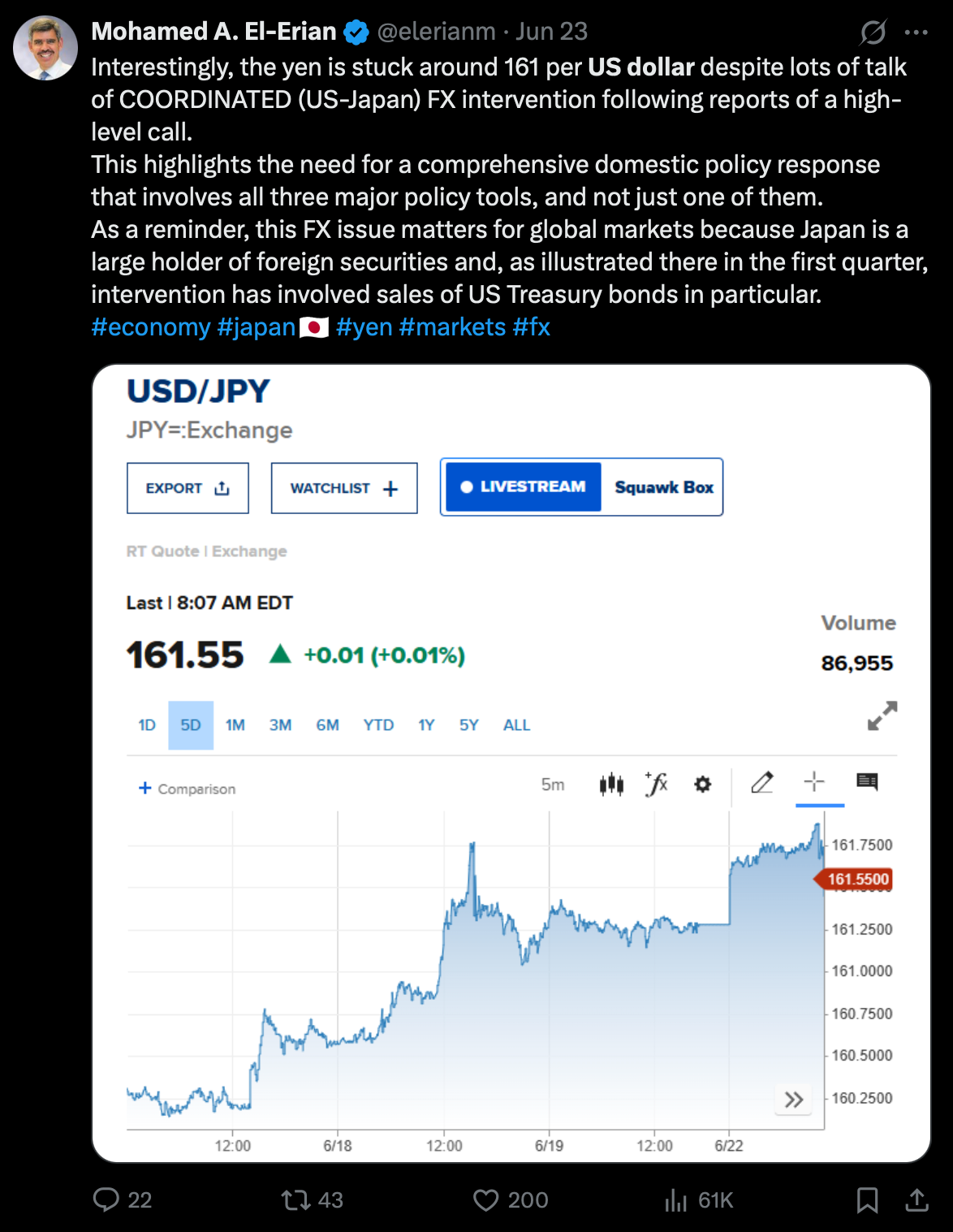
Respected economists (yes, there are still a few out there) have taken note, too. Like former PIMCO CEO and now Chief Economic Adviser at Allianz Mohamed El-Erian, who flagged the Japanese yen. Pinned at its weakest since 1986, El-Erian reminds everyone that when Japan fights to defend it, it has had to sell US Treasuries to do it.
A whole country dumping Treasuries to prop up its currency, and still losing to the dollar.
And so it’s natural to wonder how the dollar can be losing so much purchasing power over time and still be the strongest thing standing? Is the debasement trade unraveling? And if we own these hard assets, should we be worried?
All good questions, and ones we are going to answer, nice and easy as always, here today.
So, pour yourself a big cup of coffee and settle into your favorite seat as we get to the bottom of what the dollar is really doing in this Sunday’s Informationist.
Partner spot
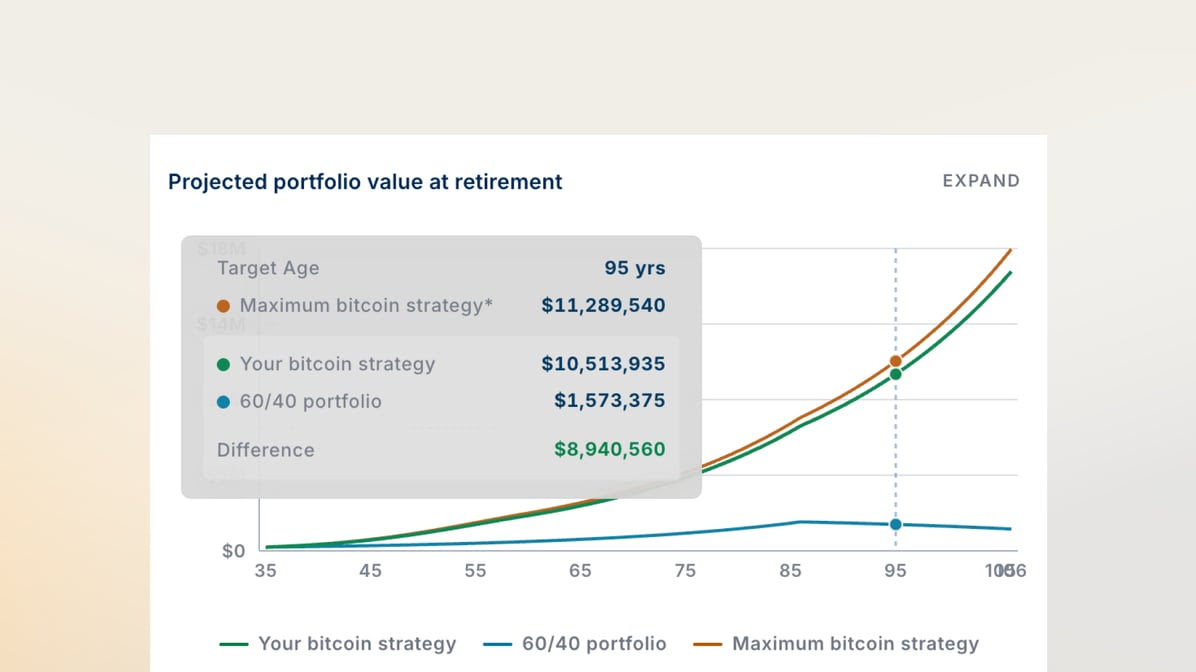
Most people know how much money they want in retirement. Few know how much bitcoin it could take to get there.
In a free one-on-one session, an Unchained specialist will walk through your numbers using our proprietary retirement calculator and model multiple outcomes based on your goals and timeline.
You’ll leave with a personalized retirement projection you can revisit anytime and use to make more informed decisions about your future.
Availability is limited to ensure each session receives dedicated attention.
🌍 What the Dollar Is Actually Telling You
Let’s start with the contradiction at the center of all this.
The dollar is being debased. We know this. There’s no argument against it.
Deficits with no end in sight, a Fed that prints when it’s cornered, Treasury debt that only climbs. Anyone who’s bought groceries or priced a house lately can feel the dollar losing its grip.
And don’t even get me started on the cost of insurance.
Yet the grand ol’ US dollar is strengthening versus hard assets into this debasement.
Why?
Two things are actually working against gold, silver, and Bitcoin right now, let’s visit each.
The first is a rotation. Those hard assets had monster runs before these sell-offs began and a lot of fast money that rode them up has been cashing out, selling the winners to chase the AI trade and everything orbiting it. When the shiniest object in the room is artificial intelligence, the money parked in gold and Bitcoin gets tapped. That’s real, and it’s part of why the debasement trade has felt so heavy lately.
But a rotation is a flow. Hard to see, and even harder to time.
The second force you can read on a chart every single day. The foreign exchange value of the dollar.
Don’t worry, we’re going to keep this simple.
Some of you have heard me break down the Dollar Index before, but if you have not, you can find the full explanation here:

TL;DR on the DXY: When we hear “the dollar is strong,” what they almost always mean is the DXY, the US Dollar Index. And the DXY measures one thing: the dollar against a basket of six other paper currencies.
The euro, at a whopping 57.6% of the entire index
The Japanese yen, 13.6%
The British pound, 11.9%
The Canadian dollar, Swedish krona, and Swiss franc splitting what’s left
Let’s go back to that euro weight for a second.
Nearly 58 cents of every point in that index is really just the dollar versus the euro. When the DXY climbs, mostly what it’s telling us is that the dollar is beating the euro, with a little yen and pound mixed in.
Which makes the DXY a bit of a beauty contest among paper currencies. And right now the dollar is winning it. But winning that contest doesn’t make the dollar healthy. Like my good friend Greg Foss likes to say, “the US dollar is just the cleanest dirty shirt in a pile of dirty laundry.”
Every currency in that basket is being debased too, the euro and the yen arguably faster. The dollar can win the race among the sick and still be sick itself.
And there’s the knot, untangled. Two different yardsticks, and the world, including most of mainstream media 🙄, mixes them up constantly.
One measures the dollar against other paper: the euro, the yen, the pound. That’s the DXY. That’s what’s “strong” today.
The other measures the dollar against real things: what it buys in groceries, in gold, in a roof over our heads, across years and decades. That’s debasement. That’s the slow bleed we've all felt for years.
And no, it’s not going to stop.
Remember, when gold and Bitcoin are red while the DXY is green, what’s in front of us is the dollar winning the paper race, with real consequences for everything priced in dollars. The debasement story is still running underneath, on its own slower clock.
Now let’s actually look at it, because a single number on a screen tells us almost nothing. We have to zoom out.
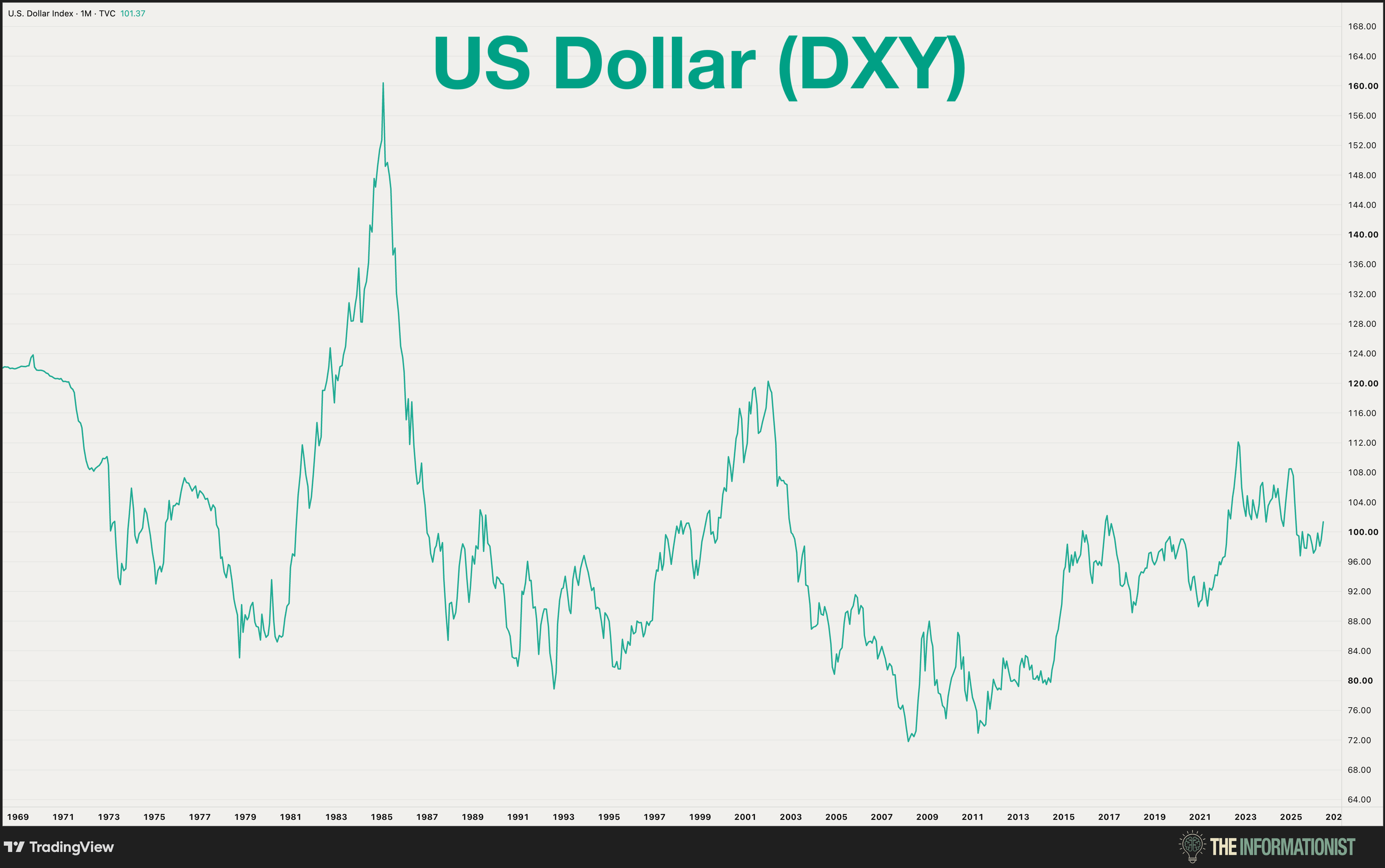
The dollar across half a century
What do we see?
The spike to its all-time high of 164.72 in 1985, the long fall, the 2008 bottom near 71, the swings since. At today’s ~101, the dollar is middle of the pack, nowhere near historically strong. “Strong” here means strong versus recent months, not versus history.
Keep that 1985 peak in mind, it comes back later.
The dollar since 2021
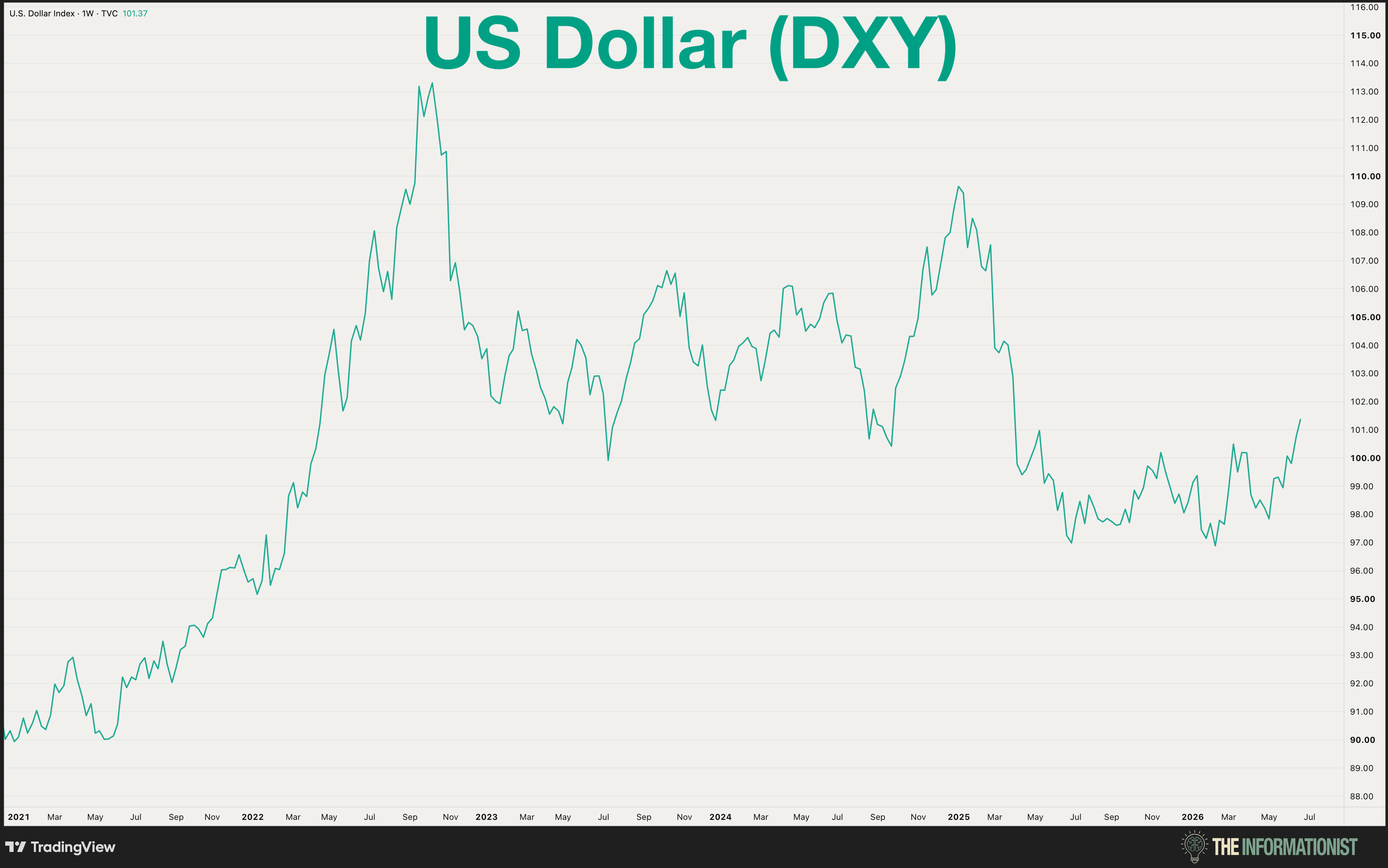
Now, what do we notice?
The dollar topped near 114 in 2022, checked back a few times, with 100 as support, then spent most of 2025 grinding lower, all the way toward 97. For most of last year the dollar was falling and hard assets were having the time of their lives.
Then, this spring, it turned.
Daily DXY, last 12 months
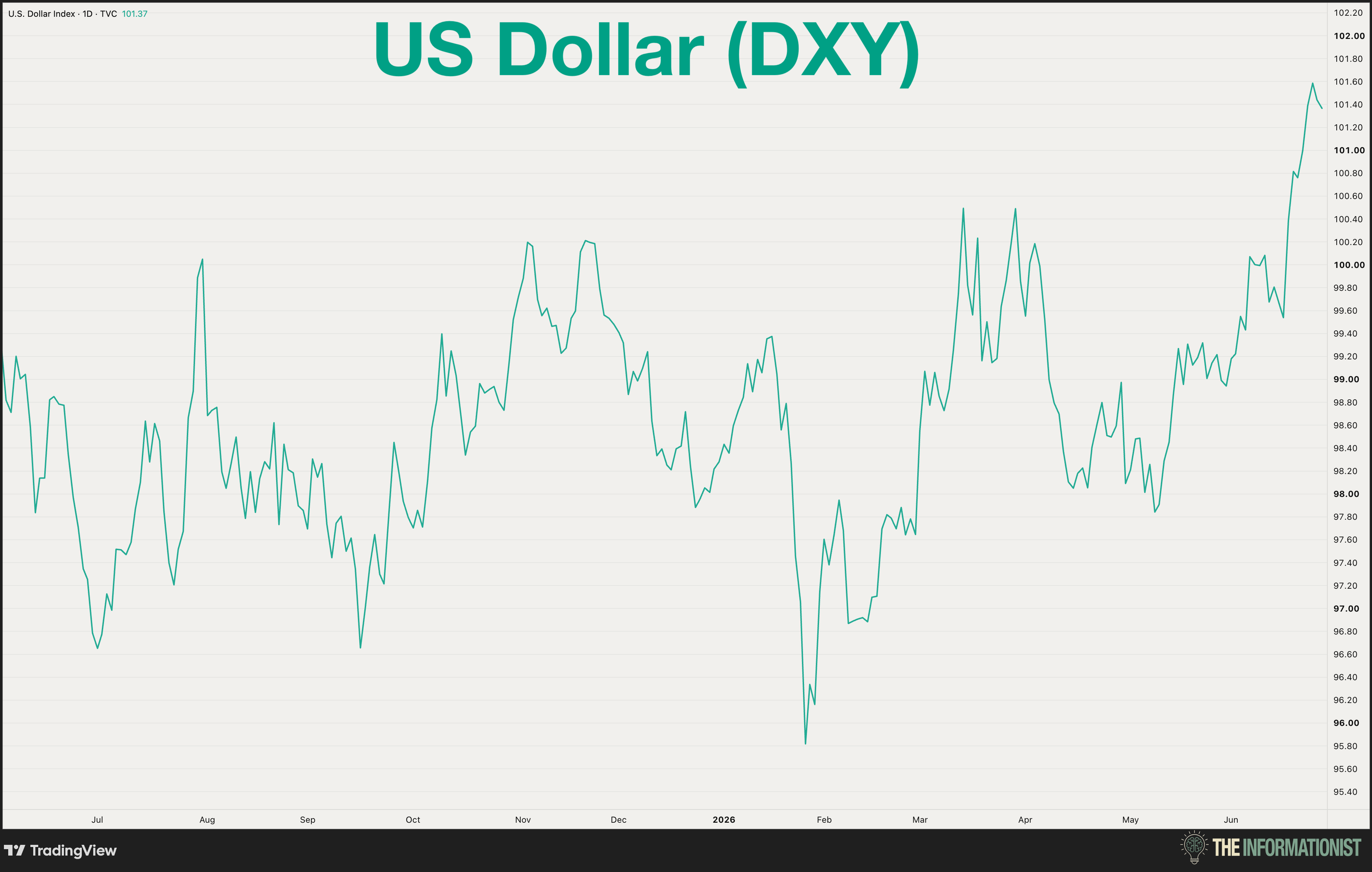
And finally, what we notice is that from a February low near 96, the dollar has run all the way back above 100 to a 13-month high just over 101. And during that stretch, no surprise, Bitcoin began selling off early, and then gold and silver followed at the beginning of this year.
The dollar is winning the paper race, and the timing of that win is leaning right on our portfolios. Bitcoin cracked first, late last fall. Gold and silver followed early this year. Same dollar, same pressure, just in sequence.
Which leaves the one question that actually matters for our money now.
Why is the dollar winning, right now, all at once? And when does it stop?
Because a strong dollar feeds on itself. The higher it climbs, the more it pulls money toward it from every corner of the world, until something out there finally bends.
Or breaks.
Understand that loop, and we understand the only thing that really matters right now. When the pressure lifts, and our hard assets stop bleeding.
That’s exactly where we’re going next.
